
The Go Blue economy in Kenya is a strategic 4-year initiative (2021–2025) designed to unlock the economic potential of Kenya’s coastal resources while ensuring their sustainable conservation. It focuses on the six coastal counties—Mombasa, Kwale, Kilifi, Tana River, Lamu, and Taita Taveta—which form the Jumuiya ya Kaunti za Pwani (JKP) economic bloc.

The Core Pillars of Go Blue
The initiative is structured around three primary components to drive integrated coastal development, focusing on the Blue Economy:
- Go Blue Growth: Focuses on job creation and economic opportunities in sectors like fisheries, aquaculture, and coastal tourism, specifically targeting youth and women.
- Go Blue Environment: Aims for sustainable land-sea planning to protect marine ecosystems and build climate resilience.
- Go Blue Security: Enhances maritime governance and law enforcement to create a safe environment for economic activities, such as international trade and shipping.
Key Drivers and Partners
The program is a joint partnership between the Government of Kenya and the European Union (EU), supported by several international and local actors:
| Stakeholder Type | Major Drivers |
| International Partners | European Union (funder), Germany (GIZ), Italy (AICS), Portugal (Camoes Institute), and France (Expertise France). |
| UN Agencies | UN-Habitat and UNEP, which lead the environmental and spatial planning components. |
| National Government | Blue Economy Secretariat, the Ministry of Devolution, and the State Department for Fisheries and the Blue Economy. |
| Local Government | The Jumuiya ya Kaunti za Pwani (JKP) secretariat and the governors of the six coastal counties. |
| Private Sector | Local MSMEs, Vocational Training Centres (VTCs), and Beach Management Units (BMUs). |
The initiative had successfully reached over 6,000 beneficiaries, placing nearly 3,000 people in jobs and upskilling more than 2,000 MSMEs by early 2025.
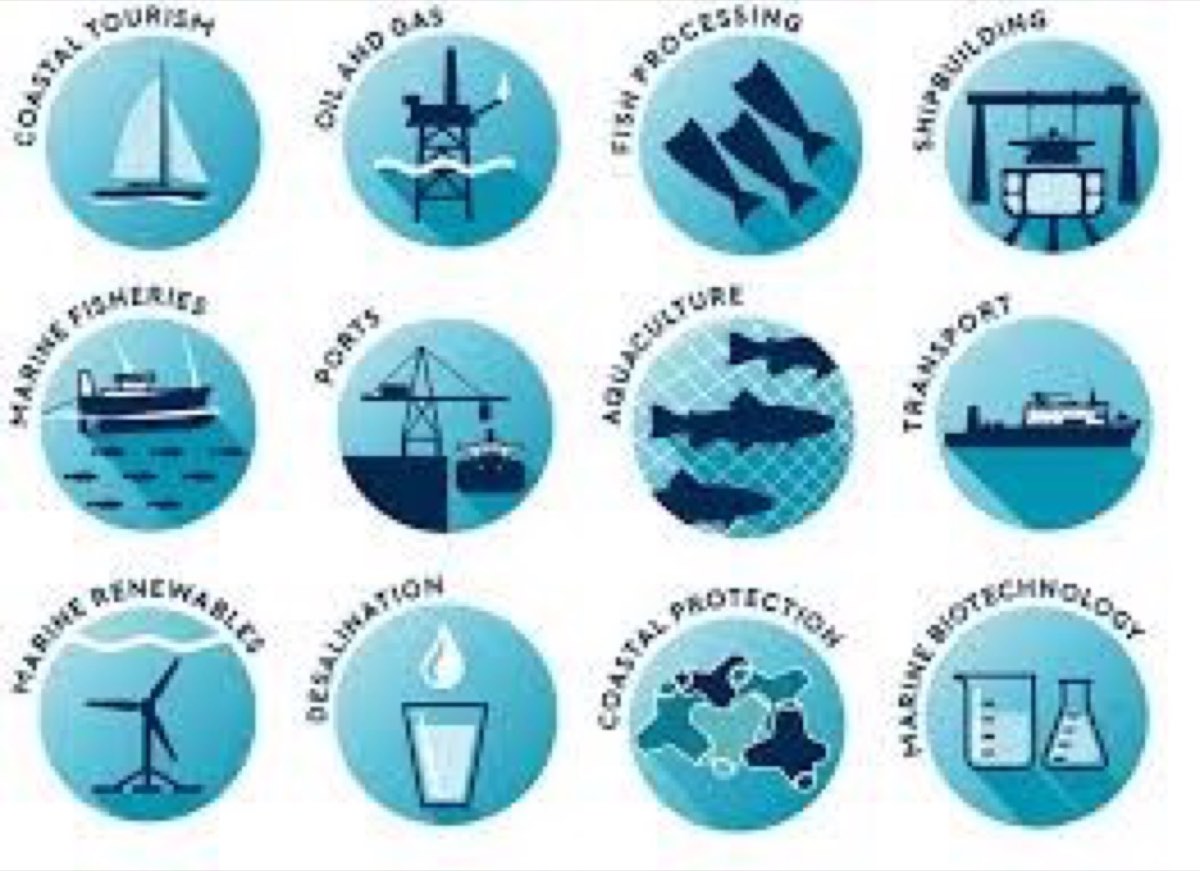
The Go Blue initiative identifies several high-potential investment opportunities across the six coastal counties (Mombasa, Kwale, Kilifi, Tana River, Lamu, and Taita Taveta). These opportunities are categorized into established and emerging value chains that aim to drive sustainable development and job creation.
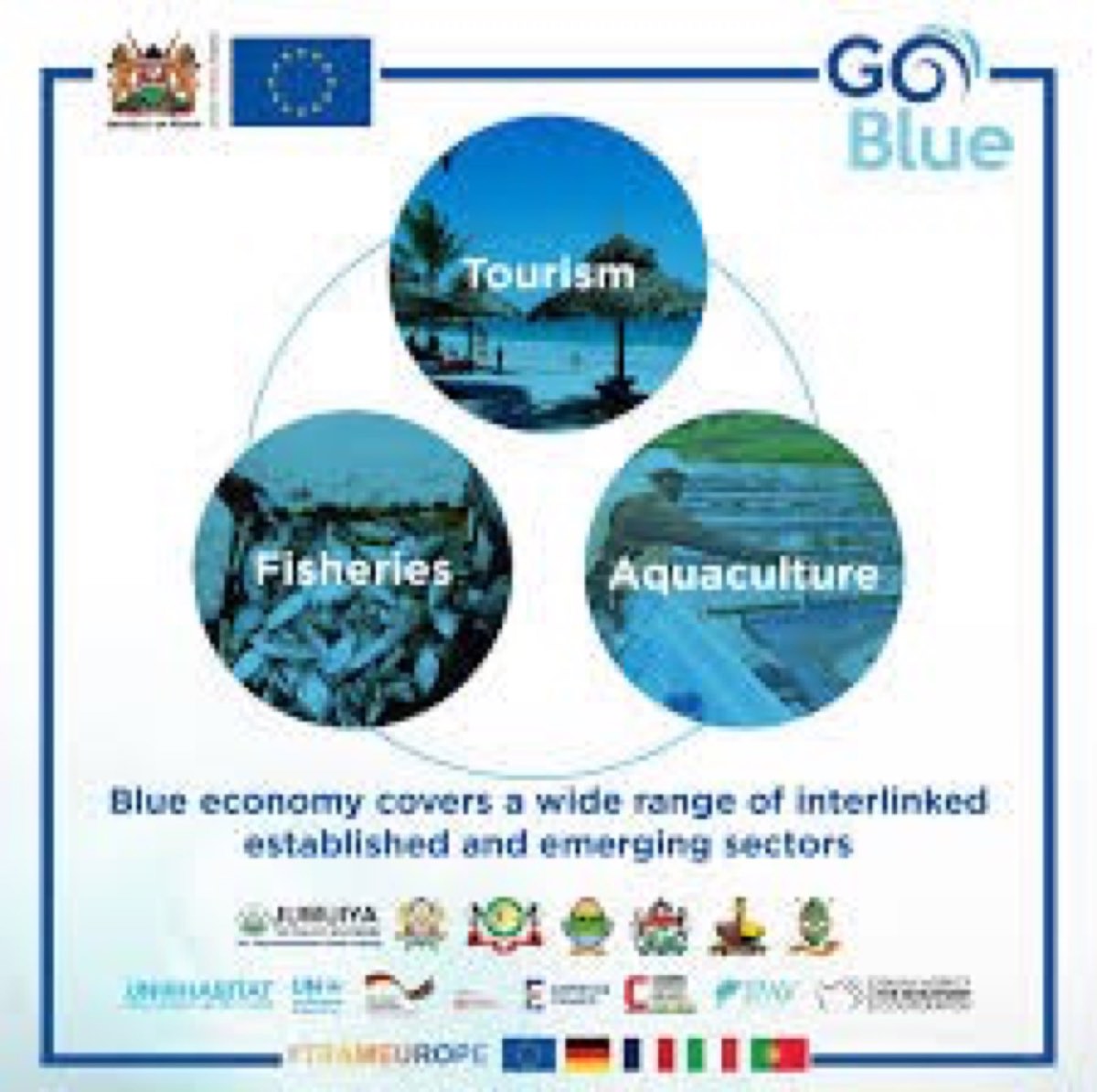
1. Sustainable Fisheries & Aquaculture
This sector is a primary focus for modernising coastal livelihoods.
Fish Processing & Value Addition: Investment in cold storage facilities and processing plants to reduce post-harvest losses (currently up to 40%).
Mariculture: High-growth opportunities in seaweed farming, crab fattening, and milkfish hatcheries. Kwale County already hosts the Kibuyuni Seaweed Processing Centre as a successful model.
Aquaculture Inputs: Production of quality fingerlings and specialized fish feed for both marine and inland cage farming.
2. Coastal & Marine Tourism
Tourism remains the largest contributor to the coastal blue economy, accounting for over 8% of Kenya’s GDP.
Eco-tourism & Water Sports: Development of sustainable leisure activities like snorkeling, deep-sea expeditions, and glass-boat tours.
Cruise Tourism: Expanding hospitality services and infrastructure to cater to international cruise ships docking in Mombasa.
Cultural Heritage: Grants are available for projects that integrate local heritage into tourism products.
3. Maritime Transport & Logistics
Mombasa and Lamu serve as critical regional trade hubs.
Ship Building & Repair: Infrastructure for maintaining both local fishing vessels and international container ships.
Port Services: Opportunities in cargo consolidation, bunkering (fueling), and port agency services as ports like Shimoni and Liwatoni expand.
Blue Logistics: Improving the supply chain for “blue foods,” including specialized transportation for temperature-sensitive products.
Marine Biotechnology: Utilizing marine resources for the manufacture of pharmaceuticals, lotions, and soaps (e.g., seaweed-based products).
Renewable Energy: Unlocking the potential of offshore wind, tidal, and wave energy in the Indian Ocean.
Waste-to-Value: Business models that recycle ocean plastics into products like dhows or art pieces.
5. MSME Support & Financing
Strategic financing is available to help local businesses scale:
Investing in Women in the Blue Economy (IIW-BEK): Grants ranging from US$50,000 to US$400,000 for women-owned enterprises in these six counties.
Blue Bond Financing: A developing framework to provide long-term funding for large-scale maritime infrastructure.
MMS Advocates is involved in some of these initiatives with JKP and will be rolling out a series of articles on the Go Blue Project within the Blue Economy topic, as well as the progress of the various opportunities within each county.
Useful Links for Further Reading:
- https://jumuiya.org
- https://www.goblue.co.ke
- https://www.unep.org
- https://sdgs.un.org
- https://unhabitat.org
- https://www.unep.org
- https://www.expertisefrance.fr
- https://www.nairobiconvention.org
- https://kippra.or.ke
- https://www.aecfafrica.org
- https://www.cda.go.ke
- https://www.instituto-camoes.pt
- https://faolex.fao.org