
Africa’s richest man has chosen his next frontier. What it means for Kenya, the law, and the people of the coast.
There is a phrase Aliko Dangote keeps coming back to: “If we don’t invest in our own continent, who else will?” It is part rallying cry, part commercial logic. The man who built West Africa’s largest single-train oil refinery on the outskirts of Lagos now has East Africa in his sights, and he has made clear which city he wants. Mombasa. Not Dar es Salaam. Not Tanga. Not Kampala. Mombasa.
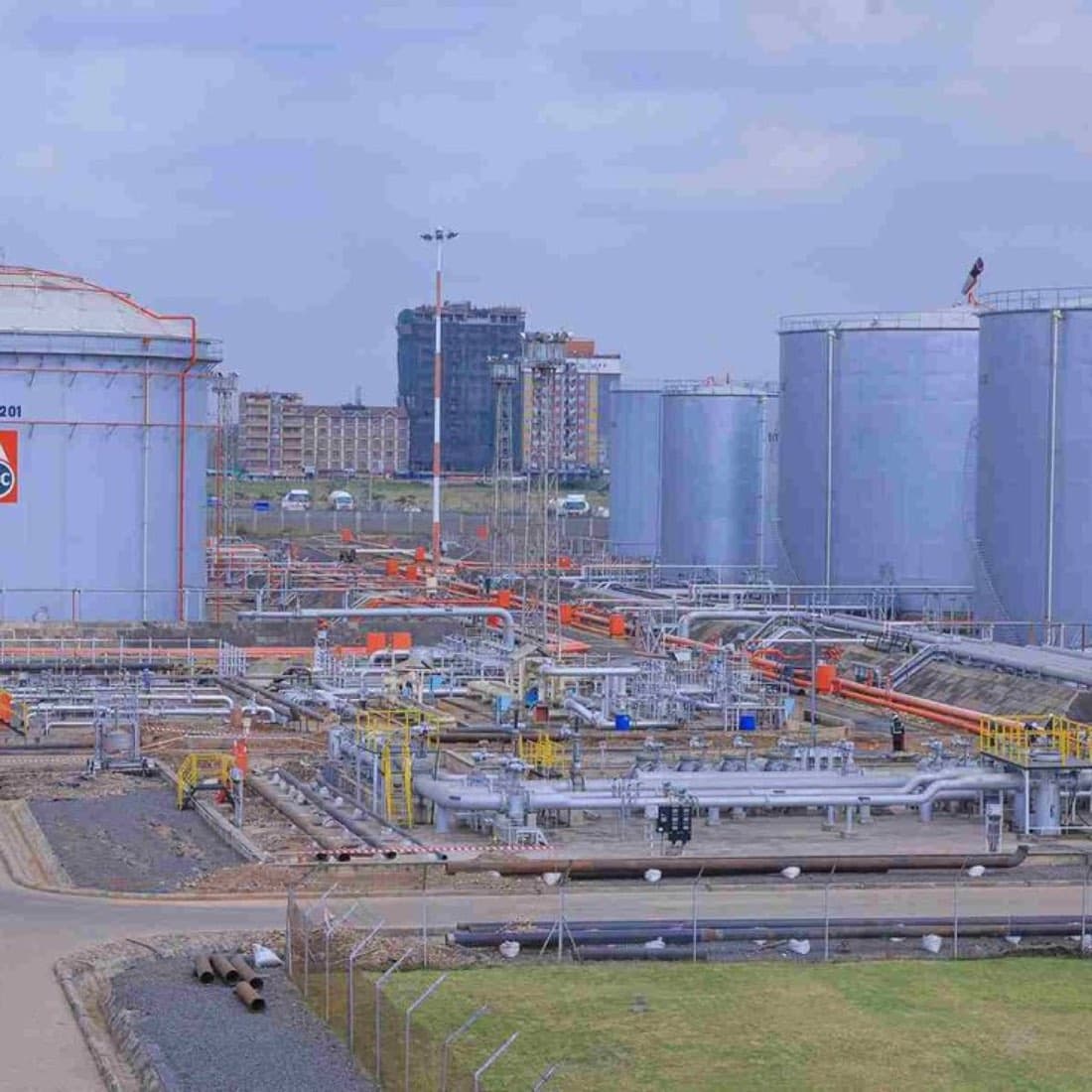
The proposed facility would process 650,000 barrels of crude oil per day at an estimated cost of between $15 billion and $17 billion making it, if built, one of the largest private investments ever made on the African continent. The scale alone demands attention. The legal, commercial, and geopolitical dimensions that surround it demand considerably more.
How We Got Here: The Summit, the Shift, and the Statement
The story starts not in Mombasa but in Nairobi. On April 23, 2026, at the Africa We Build Summit in Nairobi, Dangote made a headline commitment: he would replicate the Lagos model in East Africa, provided regional governments gave him the support needed to make it viable. The conversation, at that stage, centred on Tanzania’s port of Tanga, which had been discussed as a possible host city for a joint East African refinery. The logic was geographic: the proposed East African Crude Oil Pipeline (EACOP) from Uganda’s oil fields terminates at Tanga, making it a natural landing point for a refinery fed by landlocked supply.
Then the calculus shifted. Speaking to the Financial Times on May 10, Dangote broke away from the Tanga consensus with striking directness. He said he was leaning toward Mombasa, pointing to its deeper and more developed port infrastructure. He noted that crude could simply be shipped in by sea, removing any dependency on the pipeline route. And he made the commercial case bluntly: “Kenyans consume more. It’s a bigger economy.”
For Tanzania, the optics were difficult. Tanzanian officials had publicly noted that the Tanga proposal had been floated before full regional consultations were concluded. The revelation of a pivot toward Kenya added further friction to what had been a diplomatically sensitive announcement. Dangote, characteristically, left a door ajar: Tanzania, he said, remained a possibility “if they are able to sort themselves out.” There is a third name that had circulated briefly in earlier regional discussions, the DRC, as a crude supply partner given its oil reserves, though never seriously as a host location for the refinery itself.
“If we don’t invest in our own continent, who else will? We’ll be price movers in the market.” — Aliko Dangote
Why Mombasa? The Port, the Market, and the Moment
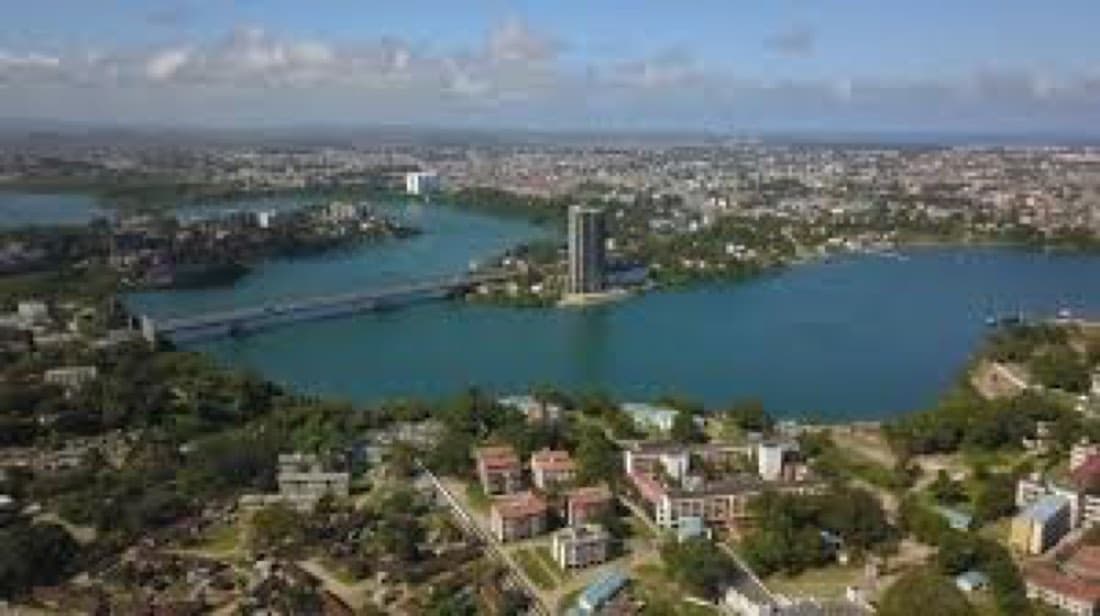
Dangote’s preference for Mombasa is not sentiment. It is infrastructure arithmetic. The Port of Mombasa is East Africa’s dominant gateway, handling fuel imports that supply not only Kenya but also Uganda, Rwanda, South Sudan, and the eastern DRC. A refinery embedded in that network would immediately inherit a built-in distribution architecture.
Kenya also carries weight that Tanzania and Uganda simply cannot match in terms of refined fuel demand. Kenya imported 40 million barrels of petroleum in 2025, sourced primarily from the UAE, Saudi Arabia, India, and Oman. That pipeline has been disrupted by Iran’s closure of the Strait of Hormuz, driving up prices and exposing a structural vulnerability that East African governments have now collectively acknowledged they can no longer ignore.
The contrast with Tanga is also practical. Dangote noted that crude can be delivered directly to Mombasa by sea, which liberates the project from dependence on the EACOP pipeline timeline and its attendant political and financing complications. For a businessman who has seen a major refinery project stretch over a decade in Nigeria, that kind of operational flexibility has real value.
There is also a precedent worth noting. Kenya Petroleum Refineries Limited, which operated in Mombasa from 1963, was shut down in 2013 after years of inefficiencies and declining throughput. The site and the institutional memory still exist. Whether they become a foundation or simply a cautionary tale depends on what structures are put in place this time.
What Dangote Actually Wants: The Conditions on the Table
Dangote has not presented this as a philanthropic gesture. He has spelled out, with unusual clarity, what he requires before a single shovel breaks ground. There are three core conditions.
First, land. The host government must provide suitable land in Mombasa for a facility of this scale. This is not a small ask: the Lagos refinery sits on 2,635 acres in the Lekki Free Trade Zone. Comparable land in or near Mombasa, appropriately zoned and cleared of competing claims, will require careful coordination between the national government and Mombasa County.
Second, regional financing participation. Dangote has asked that the governments of Kenya, Uganda, and Tanzania contribute to the project’s financing. He is not asking them to fund it outright, but some form of equity stake or development finance support is on the table. Kenya has signalled support at the highest level, with East African states indicating they want to build refining capacity together. The precise financial architecture remains to be negotiated.
Third, and most critically: anti-dumping protection. This is Dangote’s non-negotiable. He told The Africa Report, on the margins of the same summit: “Anywhere where we are going to put up an industry, if they don’t have good anti-dumping laws and regulations, we will not invest in that place, no matter how good it is.” The target of this condition is not abstract. He named Russia and India specifically as sources of subsidised refined petroleum that can undercut locally produced supply. His argument is structural: African refiners borrow capital at rates of around 30%, while their competitors in Asia and Europe access credit at 3%. Without protection, the economics of a locally built refinery collapse under imported price pressure.
This mirrors exactly the approach taken with the Lagos refinery, where policy alignment with the Nigerian government was a prerequisite for closing the investment. The question now is whether Nairobi is prepared to legislate accordingly.
The Legal Architecture: Which Kenyan Laws Come Into Play
For a law firm advising on this transaction, the regulatory landscape is genuinely rich. And it has shifted materially in the past month alone.
The Special Economic Zones (Amendment) Act, 2026. This is the most immediately relevant development. President Ruto signed the SEZ Amendment Bill into law on May 11, 2026, just days after Dangote’s Mombasa announcement. For the first time, the Act explicitly extends the SEZ framework to upstream and midstream petroleum operations. It introduces a minimum licence tenure of ten years, harmonises tax incentives across qualifying sectors, and provides statutory certainty that incentive frameworks will not be altered to the detriment of investors during the licence period. For a $17 billion commitment with a multi-decade payback horizon, that stability clause is not a minor detail. See the full text at Kenya Law.
The Energy Act, 2019 (Cap. 314). This is the primary statute governing energy sector regulation. It established the Energy and Petroleum Regulatory Authority (EPRA), which will be the central regulatory body for any refinery licence. EPRA’s mandate covers downstream petroleum infrastructure, including refinery construction, operation, and product quality standards. Any refinery project will require EPRA licensing at multiple stages. The Authority’s website and current regulatory framework can be found at epra.go.ke.
The Petroleum (Exploration and Production) Act (Cap. 308). This statute governs petroleum agreements, including the terms under which the government and private investors negotiate production sharing and access rights. It contains provisions on training funds, access to land, and the general conditions of petroleum agreements. Given that the refinery will need to integrate with crude supply chains from Uganda, South Sudan, and potentially Turkana, this statute’s reach extends beyond Mombasa’s boundaries.
The Income Tax (Amendment) Act, 2026. Signed alongside the SEZ amendments, this Act revised Kenya’s approach to Capital Gains Tax and tax treatment for large-scale industrial investors. The combined effect of the Income Tax amendments and the SEZ framework creates a significantly more competitive fiscal environment than existed even six months ago. For transaction lawyers advising Dangote Group, the interaction between the two instruments will be a primary area of due diligence.
The National Environment Management Authority (NEMA) framework. No refinery of this scale proceeds without an Environmental Impact Assessment (EIA) under Kenya’s Environmental Management and Coordination Act. NEMA has already flagged the need for robust oversight frameworks in the context of expanded petroleum activity. This process is invariably time-consuming and will involve public participation requirements that extend into Mombasa County’s coastal communities.
Land laws: the Land Act, 2012 and the Land Registration Act, 2012. The provision of land by the government raises immediate questions under Kenya’s constitutional and statutory land framework. Compulsory acquisition, community land rights, and the rights of existing occupiers of any proposed site will all need to be addressed. Mombasa’s coastal land has historically complex ownership structures, with competing claims between national government, county government, and communities. This is, frankly, one of the most legally consequential aspects of the entire project.
Anti-dumping regulation and the East African Community framework. Dangote’s core condition requires the creation or strengthening of anti-dumping mechanisms specifically for the petroleum sector. Kenya operates within the East African Community’s Common External Tariff and the broader AfCFTA framework. Any anti-dumping measure must be consistent with EAC treaty obligations and WTO commitments. This will require delicate legislative drafting, likely through amendments to the existing Anti-Dumping Regulations under the EAC Customs Management Act, with coordination at the Community level. Further reading on Kenya’s investment legal framework is available at Kenya Investment Authority.
What Kenya and Mombasa Stand to Gain
The national-level case is straightforward to make. Kenya currently imports virtually all of its refined petroleum. A domestic refinery of 650,000 barrels per day would, at design capacity, not only cover Kenya’s needs but position the country as the primary supplier of refined products across the East African region. The import substitution effect alone is significant: the cost of fuel imports is a chronic drain on Kenya’s current account.
Beyond import substitution, the refinery would generate by-products of industrial consequence: fertilisers for Kenya’s agricultural sector, petrochemicals for manufacturing, jet fuel for Jomo Kenyatta International Airport’s ambitions as a regional aviation hub. The Lagos refinery has already demonstrated this multiplier effect in Nigeria.
For Mombasa County specifically, the calculus is even more direct. A construction and operational workforce of the scale required by a facility of this size would represent a transformational injection of formal employment into a coastal economy that has historically struggled with unemployment, particularly among young people. The Lagos refinery employed tens of thousands during construction and continues to operate with a substantial permanent workforce.
The local content provisions under the Energy Act explicitly define local content as the added value brought to the Kenyan economy through the development and procurement of locally available workforce, services, and supplies. This statutory framework means that negotiated investment agreements will include binding commitments on Kenyan employment ratios, local procurement targets, and technology transfer. These are not aspirational: they are legally enforceable terms.
There are also downstream community benefits that tend to follow major energy infrastructure: upgraded road networks and logistics corridors, improved port capacity, and the development of ancillary industrial activity around the refinery footprint. Mombasa’s existing industrial zones and export processing infrastructure would be natural beneficiaries.
The risks, of course, exist too. Coastal environmental sensitivity, the history of displacement associated with large infrastructure projects in Kenya, and the fiscal implications of anti-dumping protection for ordinary consumers are all legitimate concerns that civil society, county government, and the national Parliament will raise. They should.
The Bottom Line
Dangote has done something unusual for a businessman of his stature: he has stated his conditions publicly, clearly, and in advance. He wants land, money, and legal protection. He thinks Mombasa is the right place. Kenya’s response to those conditions will determine whether this remains an interesting conversation or becomes a transformational deal.
The Kenyan government, perhaps anticipating exactly this moment, has just signed into law a suite of legislation that, taken together, reads almost as a prepared response. The SEZ amendments covering petroleum operations, the income tax revisions, the EPRA licensing framework, and the existing land and environmental statutes provide a legal architecture that, while not without gaps, is more investor-ready than it was even a few months ago.
The outstanding question is whether Nairobi will move on anti-dumping protection without antagonising its EAC partners and its obligations under AfCFTA. That is the one piece of the puzzle that has no straightforward legislative fix. It requires political will, regional negotiation, and careful legal architecture. For any firm advising on this transaction, the intersection of trade law, investment law, and energy regulation is precisely where the most consequential work lies, and where the most consequential advice will be needed.
“If we have an agreement, we can start this year.” — Aliko Dangote, Financial Times, May 2026
In collaboration with Kasichana Mumba
FURTHER READING
Dangote refinery plan explained: FurtherAfrica
Al Jazeera: Africa’s richest man plans Mombasa refinery
Ashitiva Advocates: Kenya’s SEZ Amendment Bill, 2026 analysis
Energy and Petroleum Regulatory Authority (EPRA)