

At the Kenya School of Law, we learn about professional ethics. It is not about rules. It shapes how we act decide and become in the pursuit of justice. When I think about these lessons during Easter, I see a connection between lawyering and moral responsibility. Easter is about sacrifice, truth and injustice. It reminds us of what happens when systems meant to uphold justice fail.
As a law student I know the law is not just technical. It is human. In our professional ethics classes, we learn our duty goes beyond winning cases. It extends to the court, justice and society. We are called to ensure fairness is not compromised even when it is inconvenient.
For example, a lawyer must never mislead the court. Imagine relying on a case authority only to discover it has been overturned. You must disclose that fact even if it weakens your argument. It is not a choice. It reflects integrity, the same commitment to truth that Easter calls us to.
Sometimes pressure comes from clients. A client may ask you to “adjust” facts in an affidavit to strengthen their case. In such a moment the temptation to please the client is real. Our training reminds us of our duty to the court comes first as officers of the Court in line with Section 55 of the Advocates Act. Saying no may cost you the client. It preserves your integrity. This reflects the courage to stand for what’s right even at personal cost.
Confidentiality is another principle that feels human. When a client entrusts you with information you are bound to protect it within the law. This duty is not just legal. It is moral. It is about trust, responsibility and respect for dignity. Confidentiality is firmly grounded in professional standards, including the Code of Conduct and Ethics by the Law Society of Kenya and the Standards of Professional Practice and Ethical Conduct (SOPPEC).
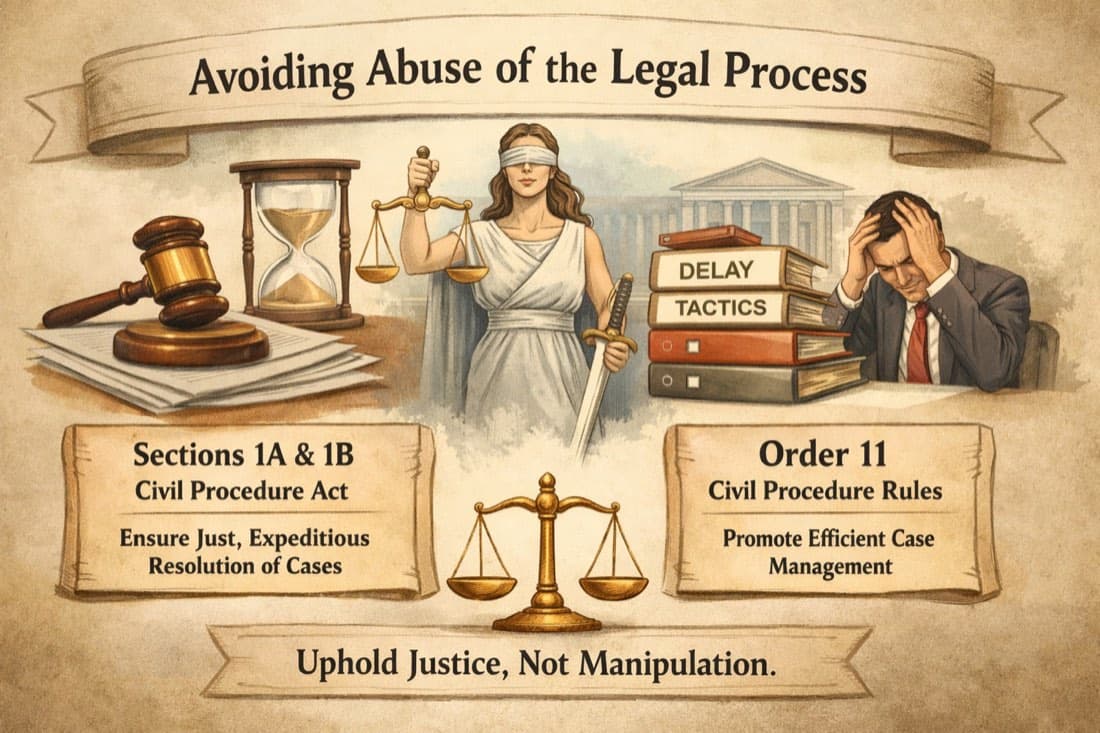
Ethics also teaches us to avoid abusing the process. Filing applications to delay justice or frustrate the other party may seem like strategy. It undermines the system we are sworn to uphold. The story of injustice at the heart of Easter reminds us how harmful it is when legal processes are manipulated. This duty is reflected in the overriding objective under Sections 1A and 1B of the Civil Procedure Act, which requires parties and advocates to assist the court in achieving the just, expeditious, proportionate, and affordable resolution of disputes. It is further reinforced under Order 11 of the Civil Procedure Rules, which promotes efficient case management and discourages unnecessary delays. The story of injustice at the heart of Easter reminds us how harmful it is when legal processes are manipulated rather than used to achieve justice.
Yet Easter is not about suffering and injustice. It is also about hope and redemption. This finds expression in law through ideas like mitigation and restorative justice. When representing a client in criminal matters we present factors like remorse, youth or willingness to reform. In doing so, we acknowledge people are capable of change. Justice should sometimes heal, not punish. This is in line with how our judiciary system works under our current chief justice, Hon. Martha Jajiko Koome, particularly through the introduction and promotion of court-annexed mediation, which emphasizes reconciliation, accountability, and restoration over adversarial outcomes.
Independence stands at the core of lawyering. Whether it is resisting a bribe or refusing influence a lawyer must remain guided by principle, not pressure. This independence requires strength of character. It allows one to stand firm when no one is watching. Recently, there have been reports of a lawyer and a judge being apprehended by officers from the Ethics and Anti-Corruption Commission over allegations of USD 80,000 approximately Kshs 10.4 million corruption involving attempts to influence the outcome of a case in the High Court. This should not be the case, as members of the legal profession are entrusted with upholding justice and the rule of law. When lawyers and judicial officers engage in such conduct, they erode public confidence in the judiciary and compromise the very foundation of justice. It is a reminder that ethical responsibility is not optional, but essential to preserving the integrity of the legal system.
In the end the intersection, between lawyering and Easter is not abstract. It is lived daily in difficult choices. Legal ethics provides the structure. Easter offers the reflection that gives those rules meaning. Together they call us to be lawyers who’re not only competent but also principled. We pursue justice with integrity serve with humility and never lose sight of the face of the law.