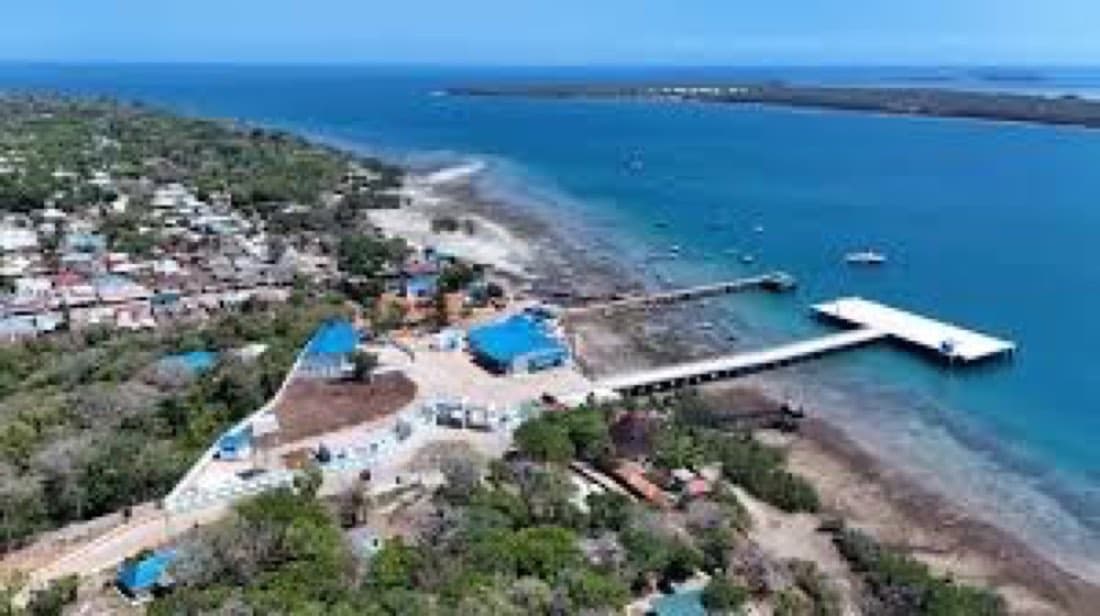


A Three-Pronged ESG Perspective on Collaboration in Coastal Kenya: Part 2
The Legal Architecture: What the Law Requires
Stakeholder engagement in conservancy work is not merely good practice. In several critical respects, it is a legal obligation. Here is a simply laid out overview of the frameworks that govern how engagement must happen.
- Constitution of Kenya, 2010 – Articles 60, 63, 69 and 174: The constitutional foundation for community land rights, sustainable resource management, and devolved community governance. Article 69 imposes specific obligations on the State to encourage public participation in environmental management. Article 63 defines community land and guarantees communities the right to manage it.
- Wildlife Conservation and Management Act, No. 47 of 2013: The primary law governing conservancies. It establishes Community Wildlife Conservation Committees, mandates benefit-sharing with communities who conserve wildlife, and requires management plans that incorporate community participation. Sections on human-wildlife compensation are particularly important for community trust.
- Community Land Act, No. 27 of 2016: Enables formal registration of community lands, giving communities a legally enforceable collective title. Any conservancy operating on community land must engage with the structures this Act creates – or risk operating without genuine legal consent from the landowners.
- Forest Conservation and Management Act, 2016: Governs activities within coastal forests and allows Community Forest Associations to co-manage gazetted forest areas with KFS. Mangrove conservation, which is central to many coastal conservancies, falls under this Act.
- Land Act, No. 6 of 2012 (as amended 2025): Governs land administration, compensation for land use, and dispute resolution. Recent 2025 amendments have reshaped how land is held and transferred – a development that coastal conservancies and their legal advisors must track carefully.
- Environmental Management and Coordination Act (EMCA), 1999: Requires Environmental Impact Assessments for significant projects and gives communities the right to participate in those processes. Communities living within or adjacent to a conservancy have a statutory voice in any EIA affecting their environment.
Understanding these frameworks is not just the job of the conservancy management committee. It is the job of every stakeholder involved – and it is where competent legal advisors become essential to the process, not optional extras. And where they come in is just as crucial as when they are involved.
The Role of Legal Professionals in Stakeholder Engagement
There is a persistent misconception in conservation circles that lawyers are for when things go wrong. They appear when land is disputed, when a contract is breached, when a license is challenged. This is a dangerously narrow view – and an expensive one, because disputes that could have been prevented by proper legal structuring at the outset rarely get cheaper once they reach a courtroom.
In the context of conservancy stakeholder engagement, legal professionals serve several critical functions that no other actor in the ecosystem can fully replicate.
Translating Rights into Realities
The Community Land Act, the WCMA, the Constitution – these are powerful instruments. But a right that a community does not know it holds is a right that cannot be exercised. Legal professionals who work at the intersection of community rights and conservation have a responsibility to translate legal entitlements into accessible knowledge. This is not charity; it is the foundation of legitimate and durable conservancy operations. A community that understands its legal position is a genuine partner. One that does not is a potential adversary waiting to be organized by someone else.
Kenya has a strong tradition of community legal empowerment, from Kituo Cha Sheria’s ‘Taking the Law to the People’ programme to the community paralegal networks that have helped thousands of rural households understand and assert their land rights. Conservation advocates should be contributing to that tradition, not standing apart from it.
Structuring Agreements That Actually Hold
Benefit-sharing agreements, community development commitments, management plan provisions, land-use covenants – these are the instruments through which the promises of an SEP become enforceable. Poorly drafted agreements are one of the most common reasons conservancy relationships break down. A community that agreed to limit land use within a corridor, relying on a promised revenue stream that was never legally secured, has a grievance that is both legitimate and dangerous.
Legal professionals who specialize in community and environmental law can structure agreements that balance investor interests with community rights, ensure that benefit-sharing formulas are transparent and auditable, create enforceable grievance mechanisms, and protect community land from being eroded by successive contractual concessions. This is not abstract lawyering; it is the difference between a conservancy that thrives for a generation and one that collapses in a funding cycle.
Navigating the Multi-Agency Regulatory Environment
Conservancies in coastal Kenya must navigate the regulatory jurisdictions of KWS, KFS, the National Land Commission, county governments, NEMA, and – in the case of coastal and marine environments – additional maritime and fisheries authorities. Each agency has its own timelines, requirements, and institutional culture.
A legal professional who understands this landscape can map the regulatory pathway for a conservancy from inception to operation, identify where bottlenecks are likely to arise, prepare communities to participate effectively in formal processes like EIAs and public participation hearings, and represent conservancy interests in administrative and judicial proceedings when necessary. In a landscape this complex, having legal counsel is not a luxury. It is risk management.
The Future and Deepening Engagement, Not Just Widening It
Kenya’s conservancy model has real achievements to its name. Wildlife is rebounding in landscapes where communities have chosen conservation as a land use. Employment through ranger programmes, tourism enterprises, and ecosystem service payments is reaching households that had few formal income options. The network of conservancies under PECFO demonstrates that the model is scalable – that it can hold across diverse communities, land systems, and ecological zones.
But scaling a model is not the same as deepening it. The next phase of stakeholder engagement in coastal conservancies must move beyond consultation – which is still too often a process of informing communities about decisions already made – towards genuine co-creation of strategy. Communities should be in the room when management plans are drafted, when benefit-sharing formulas are set, when new investors are evaluated. Their traditional ecological knowledge should inform, not merely validate, conservation science.
Government agencies must continue shifting from enforcement-centric to collaborative approaches, with genuine accountability for the compensation and benefit-sharing commitments the law already requires. Conservancy networks must invest in the governance systems and legal literacy that allow communities to be genuine principals, not managed beneficiaries. And legal professionals must be present at the table from the beginning – not summoned when the structure has already started to crack.
Stakeholder engagement in conservancy work is not a procedural requirement. It is the foundation upon which conservation success is built. The challenge lies not in identifying who the stakeholders are, but in building the legal, institutional, and human structures that allow their interests to be genuinely heard, respected, and incorporated. That is difficult work. But it is the only kind that lasts.
Conclusion: The Art and the Architecture
Conservancy work in coastal Kenya is as much about people as it is about wildlife. The interplay between Kenya Wildlife Service, Kenya Forest Service, KWCA, PECFO, county governments, and the communities who ultimately hold the legal rights over the land define whether conservation succeeds or fails.
ESG principles give us a framework. The law gives us the architecture. But the real work happens in meetings that run too long, in grievances that deserve a proper hearing, in benefit payments that arrive on time or do not, and in the daily calculation that a community makes about whether living alongside wildlife is worth it.
At MMS Advocates LLP, we believe the legal profession has a specific and irreplaceable role in making that calculation come out right. We are active in Kwale County and the broader coastal region, working with communities, conservancies, and investors to build engagement structures that are legally sound, culturally grounded, and practically durable. This article is part of our ongoing series on the emerging legal and commercial frontiers of Kenya’s coast. Welcome to the journey.

Further Reading & References
Wildlife Conservation and Management Act, No. 47 of 2013 (Kenya Law): https://new.kenyalaw.org/akn/ke/act/2013/47/eng@2022-12-31
Community Land Act, No. 27 of 2016 (Kenya Law): https://new.kenyalaw.org/akn/ke/act/2016/27/eng@2022-12-31
Kenya’s 2025 Land Amendment Act – What Landowners Should Know: https://aakenyarealty.com/kenya-2025-land-amendment-act/
Land Legislative Regimes in Kenya (KKN Law): https://kknllp.com/2024/04/10/land-legislative-regimes-in-kenya/
Community Land Act – Opportunities and Challenges (MDPI): https://www.mdpi.com/2073-445X/7/1/12
Land Law in Kenya: Effects, Obligations and Rights (MMS Advocates): https://mmsadvocates.co.ke/land-law-in-kenya-effects-obligations-rights/
A Guide to the Wildlife Act of Kenya – WCMA 2013 (WildlifeDirect): https://wildlifedirect.org/wp-content/uploads/2017/02/A-Guide-to-the-Wildlife-Act-of-Kenya-2013.pdf
Enhancing Kenya’s Forest Conservation Legislative Process (ILP): https://www.internationallawyersproject.org/post/enhancing-the-legislative-process-capacity-building-for-the-kenyan-parliament-on-forest-conservatio
Community Land Act in Kenya – AfricanLII Analysis: https://africanlii.org/en/articles/2021-12-15/africanlii/the-community-land-act-in-kenya-opportunities-and-challenges-for-communities
The Case for the Legal Profession’s Involvement in Governance (Bowmans): https://bowmanslaw.com/insights/case-legal-professions-involvement-governance/
Kenya’s Community-Based Paralegals and Access to Justice (Cambridge): https://www.cambridge.org/core/books/community-paralegals-and-the-pursuit-of-justice/kenyas-communitybased-paralegals/564986EF9694059DFB7C0C0DA7656A72
Understanding the Role of a Lawyer in Kenya (Mwakili): https://mwakili.com/blog/understanding-role-lawyer-kenya