PART I: MRIMA HILL — KENYA’S KSH 8.1 TRILLION CRITICAL MINERALS ASSET
A. Geology and Discovery
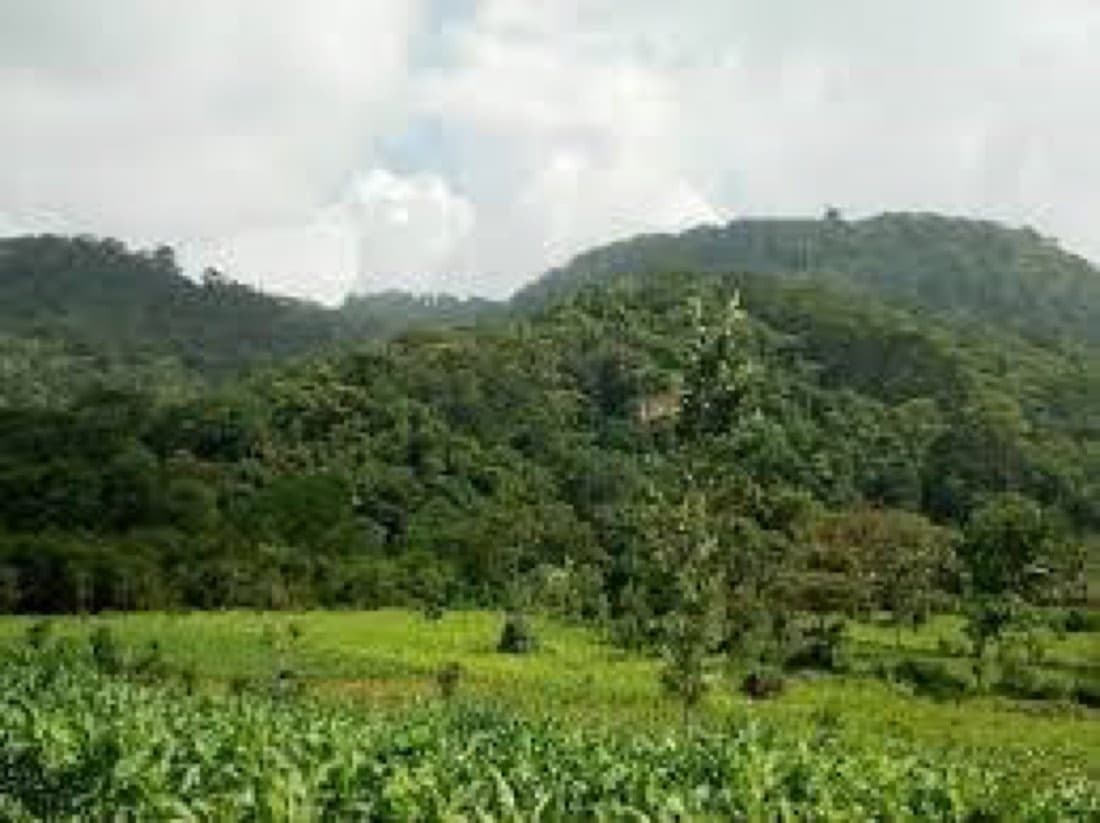
Mrima Hill is a forested carbonatite hill of approximately 390 acres located in Kwale County, about 65 kilometres southwest of Mombasa on Kenya’s Indian Ocean coastline. The hill was first identified by Kenyan geologists in the 1930s and subsequently explored through a major joint campaign with Anglo American plc during the 1950s. For decades, however, it remained undeveloped — caught in a cycle of licensing disputes, inadequate regulation, and insufficient political will to develop it on Kenya’s terms.
A comprehensive 2022 geological survey confirmed the exceptional scale of the mineral endowment. The survey established indicated resources of 5.8 million tonnes of niobium material and 48.7 million tonnes of rare earth material, with inferred deposits totalling 110.7 million tonnes. Five key minerals have been confirmed: niobium, yttrium, thorium, strontium, and lanthanum. Earlier estimates by Cortec Mining Kenya — a subsidiary of Pacific Wildcat Resources — placed the total value of these deposits at approximately $62.4 billion, a figure now widely cited as $64 billion (KSh 8.1 trillion) using current exchange rates.
SCALE: Mrima Hill’s 110.7 million tonne inferred deposit of rare earth and niobium material places it among the largest undeveloped deposits of critical minerals in the world — not just in Africa.
B. Why These Minerals Matter Globally
The strategic importance of Mrima Hill cannot be understood without appreciating the global context for critical minerals. Niobium is used to manufacture high-strength steel deployed in jet engines, oil pipelines, space infrastructure, and automotive bodies. It is also essential for superconducting applications in quantum computing and medical imaging. The rare earth elements at Mrima — including lanthanum, yttrium, neodymium, and praseodymium — are foundational to the green energy transition:
- Permanent magnets for electric vehicle motors and wind turbines
- Phosphors in LED lighting and flat-panel displays
- Catalysts in oil refining and vehicle emissions systems
- Advanced military guidance systems and precision electronics
- Smartphone screens, batteries, and camera components
China currently controls approximately 80% of the world’s rare earth processing capacity, a concentration that has driven the United States, the European Union, and allied nations to urgently seek alternative supply chains. Mrima Hill sits precisely at this strategic fault line.
C. The History of Licensing Disputes
Mrima Hill’s development history is a cautionary tale of governance failure. Over the past two decades, the site was subjected to a series of opaque, contested licensing arrangements that resulted in no development, sustained community anxiety, and significant reputational damage to Kenya’s investment climate.
Cortec Mining Kenya, the former licence holder, obtained rights to the site and conducted the preliminary resource assessment that established its value. However, the project stalled amid legal disputes with the government, community opposition, and questions about the terms on which Cortec had obtained its licence. Pacific Wildcat Resources, Cortec’s parent company, subsequently became defunct, leaving the licence position unresolved for years.
The cumulative effect was that one of the world’s most significant mineral deposits remained locked underground, generating no revenue, no jobs, and no development for the communities living around it, while the global demand for the minerals it contained grew exponentially.
D. The 2026 Tender — A New Approach
The government’s response to this history was the launch of a formal, competitive, transparent bidding process. On 27 March 2026, the Ministry of Mining and Blue Economy issued a formal Expression of Interest (EOI) gazette notice under Sections 14(1) and 223(2)(e) of the Mining Act, Cap. 306 and the 2017 Regulations, inviting suitably qualified mining operators to commercialise the Mrima Hill mineral deposits.
Cabinet Secretary Hassan Joho made the open tender mandatory in January 2026, stating it was designed to end the ‘opaque’ past licensing deals that had long denied Kenyans fair returns from their own resources. For the first time, mineral rights of this scale in Kenya are being awarded through open, competitive bidding, a structural reform with implications far beyond Mrima Hill.
The tender requirements reflect the scale and sensitivity of the project. Interested firms must demonstrate deep experience in mineral exploration, strong financial capacity, and — critically — the ability to develop processing infrastructure locally rather than simply extracting and exporting raw ore.
POLICY SHIFT: The 2026 Mrima Hill tender marks Kenya’s first open, competitive bidding process for a mineral deposit of this scale — a deliberate departure from the closed-door, discretionary licensing model that characterised past deals and generated litigation, controversy, and zero development.
E. The Global Bidding Race
The tender has attracted intense interest from three major global players, each with distinct strategic objectives:
United States: The US government under President Donald Trump has made securing critical minerals central to its Africa diplomacy, as evidenced by mineral-linked peace agreements in the DRC. Marc Dillard, the interim US Ambassador to Kenya, visited Mrima Hill in June 2025, signalling Washington’s direct interest. A US-backed consortium, Mrima Earth Ltd, subsequently submitted a ‘value-added’ bid to Kenya’s National Mining Corporation (NAMICO), promising downstream processing in Kenya, local job creation, and long-term skills transfer rather than raw ore export.
Australia: Mining firms RareX and Iluka Resources filed a joint application in April 2025 to develop the project alongside NAMICO. Their proposal includes processing some minerals at Iluka’s existing refinery in Australia. RareX subsequently received an exploration licence for drilling at the site. The Australian-led consortium is backed by US institutions and has engaged specialist engineering firm WSP for technical advisory.
China: China, which controls roughly 80% of global rare earth processing capacity, is competing through state-backed entities that have spent years cultivating diplomatic ties with the Kenyan government. In late 2025, community guards at Mrima Hill reportedly turned away Chinese nationals who attempted to access the site without authorisation — an incident that illustrates the intensity of the geopolitical competition on the ground.
GEOPOLITICAL STAKES: Mrima Hill is not simply a mining tender. It is a front line in the global competition for critical mineral supply chains — with the United States, China, and Australia each seeking to secure access to resources essential for the green energy transition and advanced technology manufacturing.
F. Environmental and Community Challenges
Mrima Hill presents one of the most complex environmental and community consent challenges in Kenya’s development history. The hill is double-gazetted: it is simultaneously classified as a protected forest reserve under Kenya’s forest conservation laws and as a sacred Kaya forest — one of the ancestral forest shrines of the Mijikenda and Digo coastal communities, which hold profound spiritual, cultural, and heritage significance.
Community concerns include:
- Displacement of families with deep cultural and ancestral ties to the land
- Potential radioactive contamination from thorium, which is present in the deposit alongside the commercially valuable minerals
- Destruction of sacred shrines and disruption of cultural and spiritual practices
- Environmental degradation — Mrima Hill sits just 30 kilometres from Diani Beach, East Africa’s premier tourism destination, with an annual tourism economy valued at approximately $2.7 billion
- Loss of biodiversity in a gazetted forest ecosystem
Any successful development of Mrima Hill will require a genuine social licence to operate — not merely regulatory approvals. The 2026 tender’s requirement for downstream processing in Kenya is partly designed to ensure that local communities see tangible, lasting economic benefits from the development of their land.
The Legal and regulatory framework governing these concerns includes the Mining Act, Cap. 306; the Environmental Management and Coordination Act (EMCA); the Community Land Act, 2016; the Forest Conservation and Management Act, 2016; and Kenya’s obligations under the UN Declaration on the Rights of Indigenous Peoples. A full Environmental and Social Impact Assessment (ESIA) will be mandatory before any mining licence can be granted.
PART II: DONGO KUNDU SPECIAL ECONOMIC ZONE
A. What Is Dongo Kundu?
The Dongo Kundu Special Economic Zone (SEZ) is a 1,200-hectare (3,000-acre) public special economic zone situated in Mombasa, along Kenya’s Eastern African coastline. It is one of the most strategically positioned industrial zones in East Africa — adjacent to the Port of Mombasa, the Southern Bypass Road, the Standard Gauge Railway (SGR), and Moi International Airport.
Dongo Kundu is a Vision 2030 flagship project, first conceived as part of the Mombasa Port Development Project (MPDP) supported by the Japan International Cooperation Agency (JICA). A SEZ Master Plan was developed with Japanese government support, envisioning an integrated complex comprising a free trade zone, free port, logistics hub, and industrial zone. For much of its history, however, Dongo Kundu remained a plan on paper — constrained by financing gaps, governance challenges, and the long shadow of political uncertainty at the Coast.
LOCATION ADVANTAGE: Dongo Kundu sits at the convergence of four critical infrastructure assets: Mombasa Port (East Africa’s largest), the SGR, the Southern Bypass, and Moi International Airport — giving it direct access to the East African market of 450 million people.
B. The February 2025 Breakthrough — The $1 Billion Afreximbank Deal
The pivotal moment for Dongo Kundu came on 28 February 2025, when President William Ruto presided over the signing of lease agreements between the Kenya Ports Authority (KPA), the Special Economic Zones Authority (SEZA), and Afreximbank for the development of Dongo Kundu and the Naivasha SEZ. The deal is part of a $3 billion MoU between the Government of Kenya and Afreximbank signed in 2023, aimed at unlocking private-sector participation in strategic infrastructure development.
The $1 billion commitment covers both Dongo Kundu and Naivasha. For Dongo Kundu specifically, President Ruto announced the zone is expected to create over 40,000 jobs and attract investments in footwear manufacturing, agro-processing, medical and pharmaceutical supplies, and petrochemical industries. By the time of the signing, KPA had already received 97 applications for land allocation within the zone — a strong signal of genuine investor appetite.
President Ruto framed the deal in sweeping terms: ‘This agreement fuels industrialisation, manufacturing, and agro-processing, reinforcing Kenya’s position as a regional export powerhouse. It facilitates the development of industrial parks, strengthens intra-Africa trade, and empowers micro, small and medium enterprises to compete under the Africa Continental Free Trade Area framework.’
C. Infrastructure and Construction Status
Construction at Dongo Kundu is now underway. The Kenya Ports Authority awarded the SEZ Civil and Building Works tender to Toa Corporation, a Japanese construction firm, with a contract value of approximately 33.5 billion yen (approximately KSh 34 billion). The project is expected to be completed in 1,156 days (approximately 38 months from award).
The zone has been subdivided into the following functional areas:
- Free Port Area — connected to the sea through a dedicated road network, with berths for general cargo, vehicles, and bulk grain handling
- Free Trade Zone — duty-free import and export area for qualifying businesses
- Industrial Parks — manufacturing zones for targeted sectors
- Enterprise Area — SME and light industrial facilities
- Road Network and Logistics Infrastructure — connecting internal zones and external transport links
- Water Distribution Centre — dedicated water supply infrastructure
- Dedicated Power Station — providing reliable, zone-specific electricity supply
KPA Managing Director Captain William K. Ruto, speaking at the ARISE IIP–Kenya Investment Forum at Vipingo Ridge, underscored the authority’s commitment to supporting the infrastructure backbone of the zone: ‘Tax incentives and regulatory reforms, while critical, are insufficient without robust physical infrastructure to support seamless operations. Roads, ports, power, and logistics systems are the arteries through which industrial growth flows.’
D. Target Investment Sectors
The Dongo Kundu SEZ has been designed to attract investment across a broad spectrum of sectors that leverage its port-adjacent location and the needs of the East African market:
- Petrochemical and oil refinery industries — China’s Ruike Energy Group Limited has expressed specific interest in establishing a state-of-the-art oil refinery within the zone
- Agro-processing industries — value addition for Kenya’s agricultural exports
- Pharmaceuticals and medical supplies — regional healthcare manufacturing
- Green energy and renewables — solar, wind, and clean technology manufacturing
- Footwear and leather goods manufacturing
- Cotton, textile, and apparel manufacturing
- Heavy metal and steel processing
- Automobile assembly and components
- Blue economy industries — fish processing, aquaculture, marine biotechnology
- Water desalination
- Transport and freight logistics services, warehousing, cargo consolidation
- Business support services
E. Fiscal and Regulatory Incentives
The Special Economic Zones Act, 2015 provides the legal foundation for the incentives available to investors in Dongo Kundu. These have been significantly enhanced under President Ruto’s administration, which has enacted 10 legal interventions to strengthen the SEZ programme’s competitiveness. Five additional interventions are proposed in the Business Laws Amendment Bill 2026. The government has set an ambitious target of attracting KSh 1.5 trillion in total SEZ investment.
| INCENTIVE | DETAIL |
| Corporate Income Tax | 10% for the first 10 years; 15% for the next 10 years; 30% thereafter (standard rate) |
| Single Operating Licence | All regulatory approvals combined into one licence — reducing bureaucratic friction |
| Duty-Free Operations | Preferential customs rules — duty-free import of capital equipment, raw materials, and inputs |
| Capital Repatriation | Free movement of capital and profits — investors can repatriate earnings without restriction |
| Regulatory Exemptions | Exemptions from various regulations and fees applicable to businesses outside the zone |
| Quick Project Approval | Streamlined approval timelines for new investments within the zone |
| VAT Incentives | Supplies to and from SEZs benefit from VAT relief on qualifying goods and services |
| Land Tenure | Long-term leasehold arrangements providing investment security for zone enterprises |
PART III: THE STRATEGIC SYNERGY — MRIMA HILL AND DONGO KUNDU
A. A Natural Industrial Ecosystem
The true strategic significance of Mrima Hill and Dongo Kundu emerges when they are considered together rather than in isolation. Individually, each project is transformative. Combined, they represent the potential foundation of an integrated critical minerals industrial ecosystem on Kenya’s coast — one that could reshape Kenya’s position in global supply chains for a generation.
The logic is straightforward: Mrima Hill sits approximately 50 kilometres from the Port of Mombasa and less than 70 kilometres from Dongo Kundu. The proximity creates a natural production-to-processing-to-export corridor:
- Mining and extraction at Mrima Hill — extracting niobium ore and rare earth concentrates
- Primary processing potentially established within or near the Kwale-Mombasa corridor
- Downstream value addition at Dongo Kundu SEZ — refining, component manufacturing, and finished product assembly
- Export through the Port of Mombasa — leveraging the free port facilities and logistics infrastructure at Dongo Kundu
This pipeline — from mine to processing to port — is exactly the model the government and competing investors are promoting. The US-backed Mrima Earth Ltd consortium has explicitly positioned its bid around ‘downstream industrialisation’ and local processing. Kenya’s Mining Ministry has made local processing capability a condition of the tender. And Dongo Kundu’s target sectors — including heavy metal and steel, petrochemicals, and green energy manufacturing — are precisely the downstream industries that rare earth and niobium processing would supply.
STRATEGIC LOGIC: Mrima Hill produces the raw material. Dongo Kundu provides the industrial infrastructure and fiscal environment to process, manufacture, and export value-added products. Together, they represent Kenya’s most credible pathway from raw-material supplier to critical minerals industrial power.
B. Fitting Into Kenya’s Broader National Strategy
Both projects are anchored within Kenya’s Vision 2030 framework and President Ruto’s Bottom-Up Economic Transformation Agenda (BETA). They also align with Kenya’s obligations and positioning within the African Continental Free Trade Area (AfCFTA) — the world’s largest free trade area by participating countries.
The government has set a target of increasing mining’s contribution to GDP to 10% by 2030, from its currently marginal levels. Mrima Hill is considered the single most important individual project in achieving that goal. Simultaneously, Kenya’s SEZ strategy targets KSh 1.5 trillion in total investment — with Dongo Kundu as one of three key public anchor zones, alongside Naivasha and Konza.
At the Africa Forward Summit in Nairobi in May 2026, Kenya co-chaired with France a summit that addressed, among other themes, critical minerals and their role in the global energy transition. The summit’s outcomes and the Nairobi Declaration’s commitments on green industrialisation, value addition, and manufacturing provide an additional multilateral framework within which Mrima Hill and Dongo Kundu sit.
C. Risks and Challenges
The potential of both projects is matched by the scale of their challenges. For policymakers, investors, and communities, the following risks require active management:
For Mrima Hill:
- Community and cultural consent — the double-gazetted status as both forest reserve and sacred Kaya forest creates legal and political obstacles that no amount of financial engineering can resolve without genuine community partnership
- Environmental liability — thorium radioactivity, deforestation, and proximity to the Diani tourism corridor create significant ESIA and remediation costs estimated between $200–500 million over 30 years
- Geopolitical risk — the competition between US and Chinese interests in the same deposit creates diplomatic pressure on Kenya’s government that could compromise the transparency of the tender outcome
- Commodity price volatility — rare earth prices are subject to significant fluctuation, with analysts estimating a 40% probability of significant price decline over the project lifetime
- Revenue capture — a 2020 McKinsey study found that African countries capture only 19% of the value from their mineral resources, compared to 48% in developed mining economies
For Dongo Kundu:
- Construction and delivery risk — the 38-month construction timeline and Japanese-led civil works must be completed on schedule and within budget for investor confidence to be maintained
- Absorption capacity — 97 investor applications must convert into actual on-the-ground investment commitments, requiring active investor facilitation and dispute resolution
- Infrastructure reliability — power, water, and connectivity must meet international industrial standards to compete with rival SEZs in Ethiopia, Tanzania, and Rwanda
- Regulatory coherence — the Finance Bill 2026 and ongoing tax policy volatility create uncertainty for long-term investors comparing Kenya with peer markets
CONCLUSION: KENYA’S COASTAL ECONOMIC MOMENT
Kenya’s coast, long associated primarily with tourism and the Port of Mombasa’s transit trade, is now the site of the country’s most consequential economic wagers. Mrima Hill’s KSh 8.1 trillion mineral endowment and Dongo Kundu’s $1 billion industrial zone represent a generational opportunity to reposition Kenya in global economic hierarchies.
What makes this moment different from previous false dawns is the convergence of three factors that have historically been absent. First, genuine regulatory reform: the 2026 Mrima Hill tender’s open competitive process and the Special Economic Zones Act’s strengthened investor framework represent a meaningful departure from the opaque deals and governance failures of the past. Second, committed financing: the Afreximbank deal is signed, construction at Dongo Kundu is underway, and global investors, from the US, China, and Australia, are actively competing for Mrima Hill. Third, strategic alignment: both projects are embedded in Kenya’s national development agenda (Vision 2030, BETA) and regional frameworks (AfCFTA), providing political continuity that individual projects alone cannot guarantee.
The risks are real: community consent at Mrima Hill, construction delivery at Dongo Kundu, tax policy volatility, and geopolitical pressure from competing global powers. None of these is insurmountable. But all of them require active, sustained, transparent governance, the quality that has historically been Kenya’s greatest constraint.
If Kenya gets it right, the Mrima Hill–Dongo Kundu corridor could become what analysts have long described as Africa’s potential: not a supplier of raw materials to the world’s industrial powers, but a processing, manufacturing, and exporting centre in its own right. The minerals are there. The infrastructure is being built. The investors are waiting. The question, as it has always been, is whether Kenya’s institutions and political leadership will rise to the moment.
References & Sources
1. Mining Act, Cap. 306 (Kenya) — Sections 14(1) and 223(2)(e); Mining Regulations, 2017
2. Special Economic Zones Act, No. 16 of 2015 (Kenya)
3. Environmental Management and Coordination Act (EMCA), Cap. 387 (Kenya)
4. Community Land Act, 2016 (Kenya)
5. Forest Conservation and Management Act, 2016 (Kenya)
6. Ministry of Mining & Blue Economy — Mrima Hill EOI Gazette Notice, 27 March 2026
7. Kenyans.co.ke — ‘Mining Ministry Launches KSh 8.1 Trillion Mrima Hill Rare Earth Tender’ (30 March 2026)
8. People Daily — ‘Inside Govt’s KSh 8.1T Mrima Hill Tender for Global Investors’ (30 March 2026)
9. Dawan Africa — ‘Inside Kenya’s KSh 8.1 Trillion Mrima Hill Tender’ (31 March 2026)
10. Capital FM — ‘Opinion: Mrima Hill Must Define Kenya’s Future, Not Divide It’ (1 April 2026)
11. France24 — ‘Global Race for Rare Earths Comes to Kenya’s Mrima Hill’ (26 October 2025)
12. bne IntelliNews — ‘US-backed Consortium Eyeing Kenya’s Mrima Hill Rare Earth Deposit Submits Value-Added Development Bid’ (December 2025)
13. Veridicor — ‘Kenya: Rare Earth Prospects at Mrima Hill Stir Geopolitical and Community Tensions’ (November 2025)
14. Ethical Business Africa — ‘Mrima Hill’s $62 Billion Question’ (October 2025)
15. Discovery Alert / RareX — ‘RareX Advances Mrima Hill Critical Minerals Project with WSP Partnership’ (May 2025)
16. The President of Kenya — ‘$1 Billion Dongo Kundu and Naivasha SEZs Investment’ — president.go.ke (28 February 2025)
17. Kenya Investment Promotion Centre — ‘Lease Agreement Signing for Dongo Kundu and Naivasha SEZs’ (February 2025)
18. The Coast Media Group — ‘Dongo Kundu SEZ: A Beacon of Economic Transformation for Kenya’ (September 2025)
19. The Coast Media Group — ‘Special Economic Zones: Dongo Kundu Catalyst for Industrial Transformation’ (September 2025)
20. Freight Logistics Magazine — ‘Construction of the Much-Touted Dongo Kundu SEZ Takes Shape’ (May 2024)
21. The Star Kenya — ‘State Targets KSh 1.5 Trillion in Special Economic Zones Investment Amid IFC Backing’ (February 2026)
22. Kenya News Agency — ‘KSh 39bn Set for Dongo Kundu Special Economic Zone’ (January 2023)
23. SEZA — Special Economic Zones Authority, Kenya — seza.go.ke
24. Dongo Kundu SEZ Official Website — dongokundusez.go.ke
25. Africa Forward Summit Nairobi Declaration — 12 May 2026 26.